

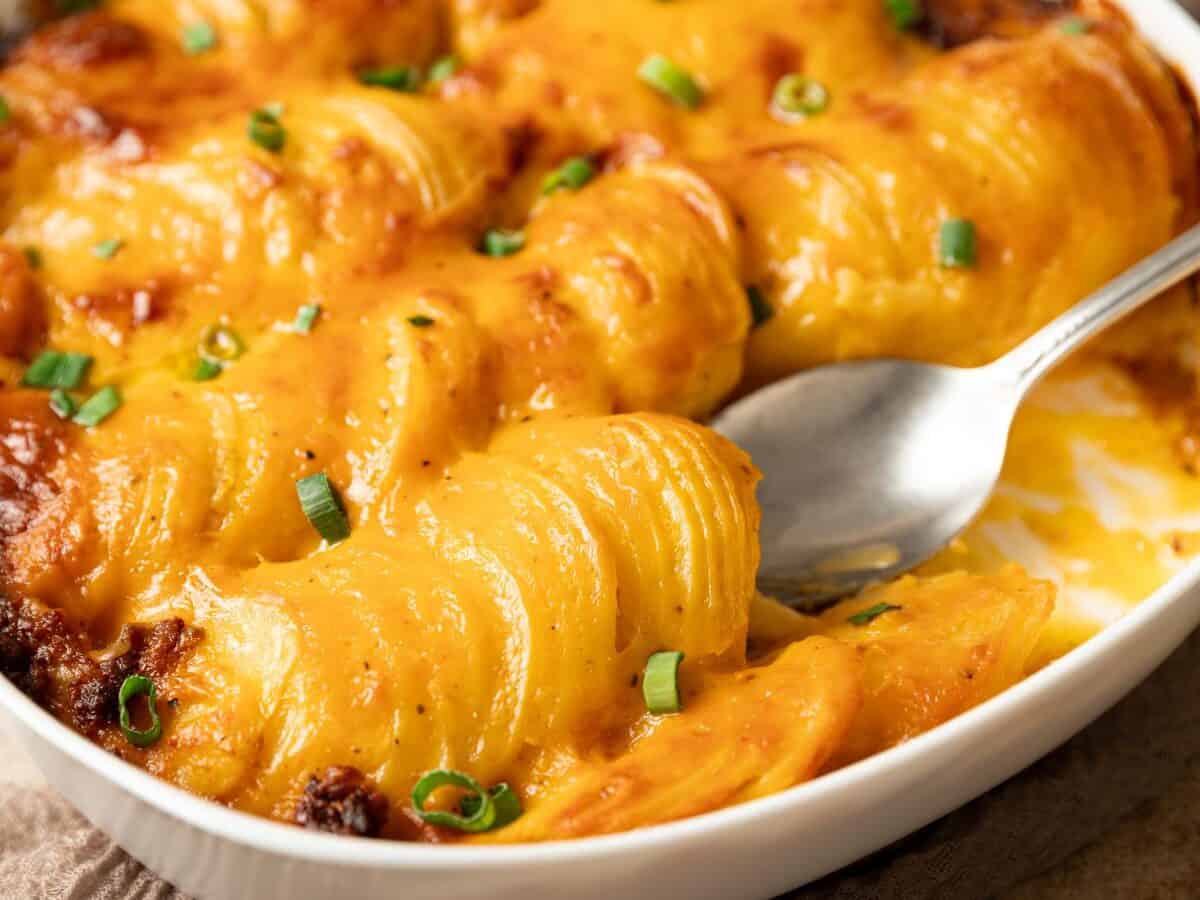
These Cheesy Scalloped Potatoes are what I make when the potatoes need to be the thing people remember. Thinly slice russet potatoes, pour a sharp cheddar and parmesan cheese over every layer, and bake in the oven until the top is deeply browned and a knife easily slides through the middle.
The best part is that you can assemble the whole dish the day before. I put it in the fridge the afternoon before and then bake it just before guests arrive.
One note on the name, because people ask. Traditional scalloped potatoes are baked in cream with no cheese at all, and potatoes au gratin have cheese running through every layer. This recipe is a deliberate combination of the two — built like scalloped potatoes, flavored like au gratin.

Holiday favorite
Make ahead
Quick Look: Cheesy Scalloped Potatoes
- ⏱️ Prep Time: 15 minutes
- 👩🍳 Cook Time: 1 hour 25 minutes
- 🕖 Total Time: 1 hour 40 minutes
- 🥔 Servings: 10 servings
- ⚡️ Calories: 296 calories per serving (based on nutrition panel)
- 🔥 Cooking Method: Thinly slice potatoes and onion, prepare cheese sauce, bake in oven at 350F
- 🛒 Main Ingredients: potatoes, onions, cheddar cheese, parmesan cheese, milk and butter
- ⭐️ Difficulty: Medium. This takes a bit of extra work to get right, but it helps that you can prep it a day before and bake the day of the holiday.
Why these cheesy scalloped potatoes work
I think the only way to make potatoes even better is to add some cheese. And these cheesy scalloped potatoes are a fantastic way to do that.
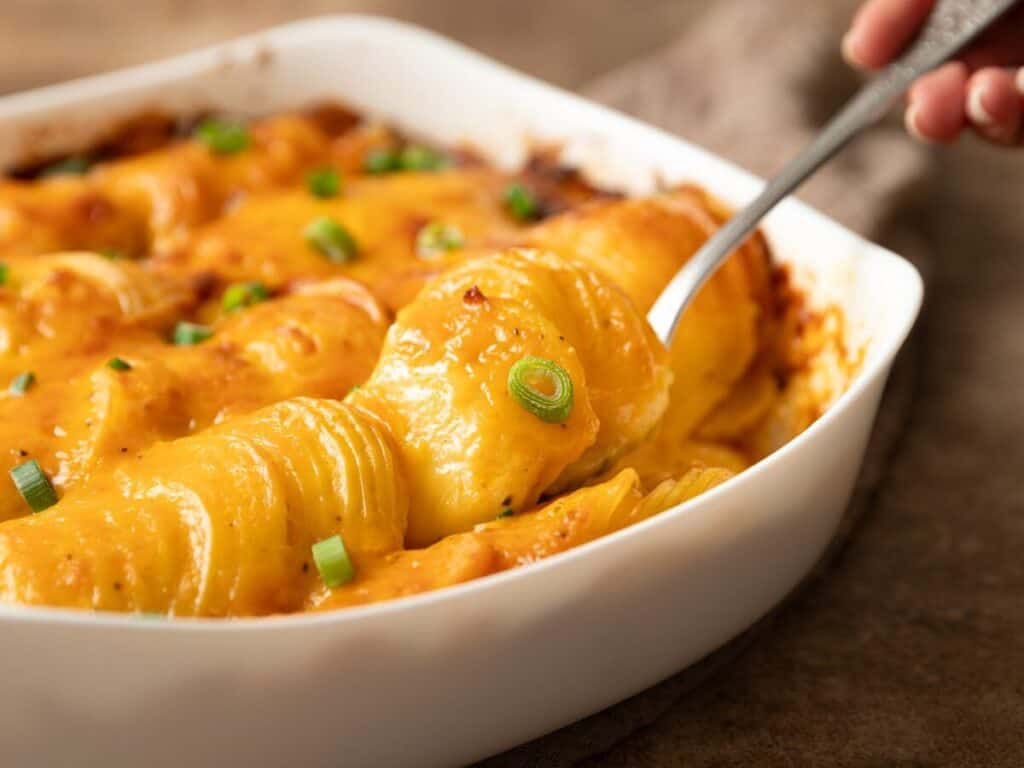
The thinly sliced russet potatoes bake until soft in a velvety cheese sauce. Then, the top layer is cooked until browned, bubbling and slightly crispy.
These scalloped potatoes with cheese are decadent yet elegant. They are the perfect side dish for holidays and dinner parties alike.
Serving Suggestions
Cheesy scalloped potatoes are the ultimate holiday side dish. You can serve them with beef or turkey around Thanksgiving and Christmas or with a honey baked ham for Easter. If you make these for Easter, be sure to make this easy bunny cake recipe for dessert!
I love to make an oven roasted turkey breast, turkey tenderloins or spatchcock chicken and serve this potato recipe along with some maple bacon brussels sprouts.
For a cozy winter meal I like to make either my air fryer meatloaf or air fryer flank steak and serve it up with these cheesy potatoes.
Scalloped Potatoes vs. Au Gratin Potatoes
These two get used interchangeably on menus, but they aren’t quite the same thing.
| Scalloped potatoes | Potatoes au gratin | |
|---|---|---|
| Sauce | Cream or a simple milk sauce | Cheese sauce |
| Cheese | Traditionally none, or a little on top | Cheese throughout |
| Potato slices | Thicker | Thinner |
| Top | Soft and creamy | Browned, often with breadcrumbs |
| Tastes like | Potatoes and cream | Potatoes and cheese |
Traditionally, scalloped potatoes are more simple. They are made with thin potatoes baked in cream until they’re soft and the edges start to brown. Au gratin means cheese, usually through every layer and browned on top.
This recipe is a hybrid, on purpose. It’s built like scalloped potatoes — layered slices, a milk-based sauce that bakes down around them — but it has sharp cheddar and parmesan running through it like an au gratin. I wanted the creamy, sliceable texture of the first and the flavor of the second, and I’m not interested in defending the terminology at a holiday table.
If you’d rather make them without the cheese, leave out the cheddar and parmesan, add an extra ½ cup of milk or swap in heavy cream, and bake as directed. You’ll have proper scalloped potatoes.
Looking for something a little healthier? Try out these brussels sprouts au gratin.
Ingredients you’ll need
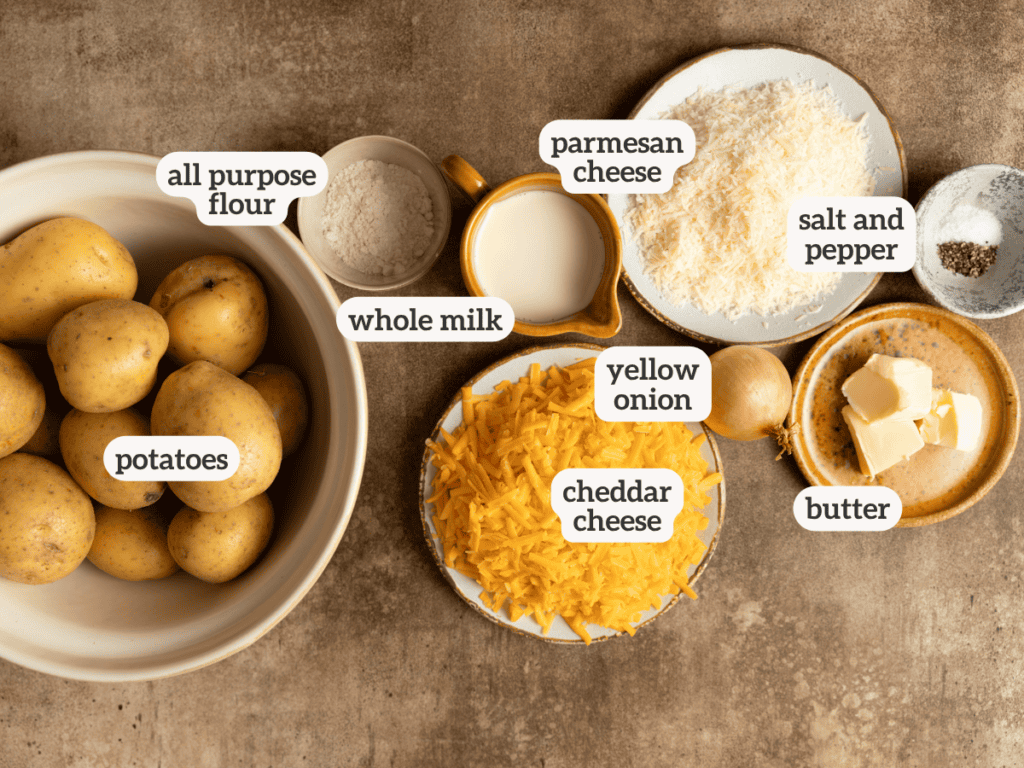
- Russet potatoes — Russets are starchy, which means they turn meltingly tender and release a little starch that helps thicken the sauce around them. Yukon Golds also work and make the dish even richer thanks to their buttery texture; they hold their shape a bit more, so you get neater layers. Whichever you use, slice them evenly to make every bite tender.
- Yellow onion — thinly sliced, it melts into the layers and gives the whole dish a nice savory base. you’d miss if it weren’t there. Not an onion person? Leave it out entirely. Love onion? Add extra slices between the layers. You can also add a little finely minced garlic to the butter when you start the cheese sauce.
- Salted butter — the first half of the roux that thickens the sauce. If you only have unsalted, use it and add a pinch more salt to the sauce at the end.
- All purpose flour — cooked into the butter for a minute before the milk goes in. This is what turns milk into a sauce that clings to the potatoes instead of pooling at the bottom of the dish. Cook it just until it smells slightly nutty, then add the milk gradually so it stays smooth.
- Whole milk — Use whole, not skim to make the sauce creamy. It also stops it from breaking in the oven. Half and half or heavy cream will make it even richer if you prefer that.
- Salt and pepper — I keep the seasoning simple here so the potatoes and cheese do the work. If you want more going on, add smoked paprika, crushed red pepper or a little hot sauce to the cheese sauce.
- Shredded sharp cheddar cheese — Sharp, not mild, because it has to stand up to 3 pounds of potatoes. Grate it yourself from a block. Pre-shredded cheese is coated in starch to keep it from clumping in the bag, and that same coating makes it melt grainy instead of smooth.
- Finely grated parmesan cheese — It adds salt and a savory, nutty depth that cheddar alone doesn’t have, and it’s what makes the top brown so well. Grate it from a wedge rather than using the shelf-stable kind in a can.
- Other cheeses that work: sharp cheddar and parmesan is my favorite combination, but gruyere is the classic choice for potatoes au gratin and is excellent here, Swiss gives you a milder, nuttier version, and pepper jack adds a little heat. Use the same total amount whichever you pick.
- Make it a main dish: got leftover ham? Scatter a cup or two of cubed ham between the layers before baking and this goes from side dish to dinner.
- To finish: fresh herbs brighten up a rich casserole. I like thinly sliced chives scattered over the top just before serving.
How to make cheesy scalloped potatoes

Step 1: Preheat oven and prep potatoes
To begin, preheat oven to 350F. Grease a 10×10 casserole dish.
Then, peel and thinly slice the russet potatoes into slices about ⅛” thick. It may help to carefully use a mandolin on the thicker setting. Slice onion into thin rounds.
Then, arrange potatoes and onions in the casserole dish in rows with a slice of onion spaced in after every few potato slices. Set casserole dish aside.
Step 2: make cheese sauce
Next, in a small sauce pan melt butter over medium-low heat until melted and bubbling. Mix in the all purpose flour with a whisk and let cook for another minute.
Slowly whisk in the milk in small increments until it is all smoothly mixed in. Whisk in the salt and pepper.
Then, reduce the heat to low and sprinkle the cheese into the sauce pan. Continue stirring until the cheese is completely melted.
Step 3: Pour cheese over potatoes and bake
Pour the cheese mixture over the potatoes and onions in the casserole dish. Pour the finely grated parmesan cheese over top and cover the dish with tinfoil.
Finally, bake covered at 350F for 70 minutes. Then, remove the foil and bake for another 10-15 minutes for the top to get golden brown.
Mad’s Expert Tips for the Best Cheesy Scalloped Potatoes 🥔
- Slice potatoes evenly, about ⅛ inch. This matters more than any other step. A mandoline gets you there in two minutes and makes every slice identical, which is what gives you layers that cook at the same rate. If you’re using a knife, go slower than feels necessary and keep checking your thickness against the first few slices.
- Don’t boil the sauce, and grate your own cheese. Bring the milk sauce to a gentle simmer only, then pull it off the heat before the cheese goes in. Residual heat melts it smoothly; direct heat makes it split. Block cheese grated at home melts far better than the bagged kind.
- Keep it covered for the first hour. The foil traps steam, and steam is what cooks the potatoes through. Uncover only at the end, when you want the top to brown.
- Rest it 10 to 15 minutes before serving. Straight out of the oven the sauce is loose and it’ll run across the plate. Fifteen minutes on the counter and it sets into something you can cut a proper square from. It stays hot far longer than you’d think.
Can You Make Scalloped Potatoes Ahead of Time?
Yes, and I almost always do to make my life easier on the day of the holiday. This is a dish that takes a bit of time and attention to assemble so working on it the day before is the whole trick to a calm holiday.
- Assemble it the day before. Build the entire casserole — potatoes, sauce, cheese — cover it tightly with plastic wrap pressed directly onto the surface, and refrigerate up to 24 hours. Pressing the wrap against the top matters: raw potatoes turn grey where air touches them, and the sauce is what protects them. Make sure every slice is coated, especially the top layer.
- Bake from cold: take it out while the oven preheats, then bake covered as usual and add about 15 to 20 minutes to the bake with the foil on before you start checking. The potatoes are done when a knife slides through the center with no resistance. Then, I continue baking without the foil on to brown the cheese on top.
- A note on slicing early: if you want to slice the potatoes more than an hour or two before assembling, keep them submerged in cold water so they don’t oxidize, then drain and pat them very dry. Wet potatoes thin the sauce.
Storage, Reheating and Freezing
Once fully cooled, cover the casserole dish and place in the refrigerator. Store in the fridge for up to 7 days.
Reheat all together in the casserole dish or scoop out individual portions. Reheat in the oven at 275F until just warmed through – about 15 minutes.
If you want to freeze this scalloped potato casserole, I recommend freezing it prior to baking. Assemble them as instructed, cover tightly and place in the freezer for up to 3 months. Cook from frozen at 325F for 1 hour and 30 minutes. Then, remove the foil and broil the top.
Check Out these other comforting side dishes


You can find the full recipe below. If you make this recipe, please rate and review it in the comments, or share it with me on Instagram!

Email Recipe for Later

Recipe
Cheesy Scalloped Potatoes
Ingredients
- 3 lb russet potatoes
- 1 small yellow onion
- 3 tbsp salted butter
- 3 tbsp all purpose flour
- 1 cup whole milk
- 1 tsp salt
- ¼ tsp ground black pepper
- 2 cups shredded sharp cheddar cheese
- 1 cup finely grated parmesan cheese
Instructions
- Preheat oven to 350F and grease a 10×10 casserole dish.
- Peel and thinly slice the russet potatoes into slices about ⅛” thick – it may help to carefully use a mandolin on the thicker setting. Slice onion into thin rounds.
- Arrange potatoes and onions in the casserole dish in rows with a slice of onion spaced in after every few potato slices. Set casserole dish aside.
- In a small sauce pan heat butter over medium-low heat until melted and bubbling. Mix in the all purpose flour with a whisk and let cook for another minute.
- Slowly whisk in the milk in small increments until it is all smoothly mixed in. Whisk in the salt and pepper.
- Reduce the heat to low and pour the cheese into the sauce pan. Continue stirring until the cheese is completely melted. Pour the cheese mixture over the potatoes and onions in the casserole dish. Pour the finely grate cheese over top and cover the dish with tinfoil.
- Bake covered at 350F for 70 minutes. Then, remove the foil and bake for another 10-15 minutes for the top to get golden brown. If you want a really crispy cheese top you can broil at the end for just a minute or 2.
Recipe Notes
- You can use golden potatoes instead of russet
- To save time you can leave the potato skin on if the texture doesn’t bother you
- You can use gruyere cheese or a blend of cheeses in place of the sharp cheddar
- To bake from frozen: bake covered at 325F for 1 hour 30 minutes. Then, remove the foil and broil to brown the top
Nutrition Information
This website provides approximate nutrition information for convenience and as a courtesy only. Nutrition data is gathered primarily from the USDA Food Composition Database, whenever available, or otherwise other online calculators.











Leave a Reply