

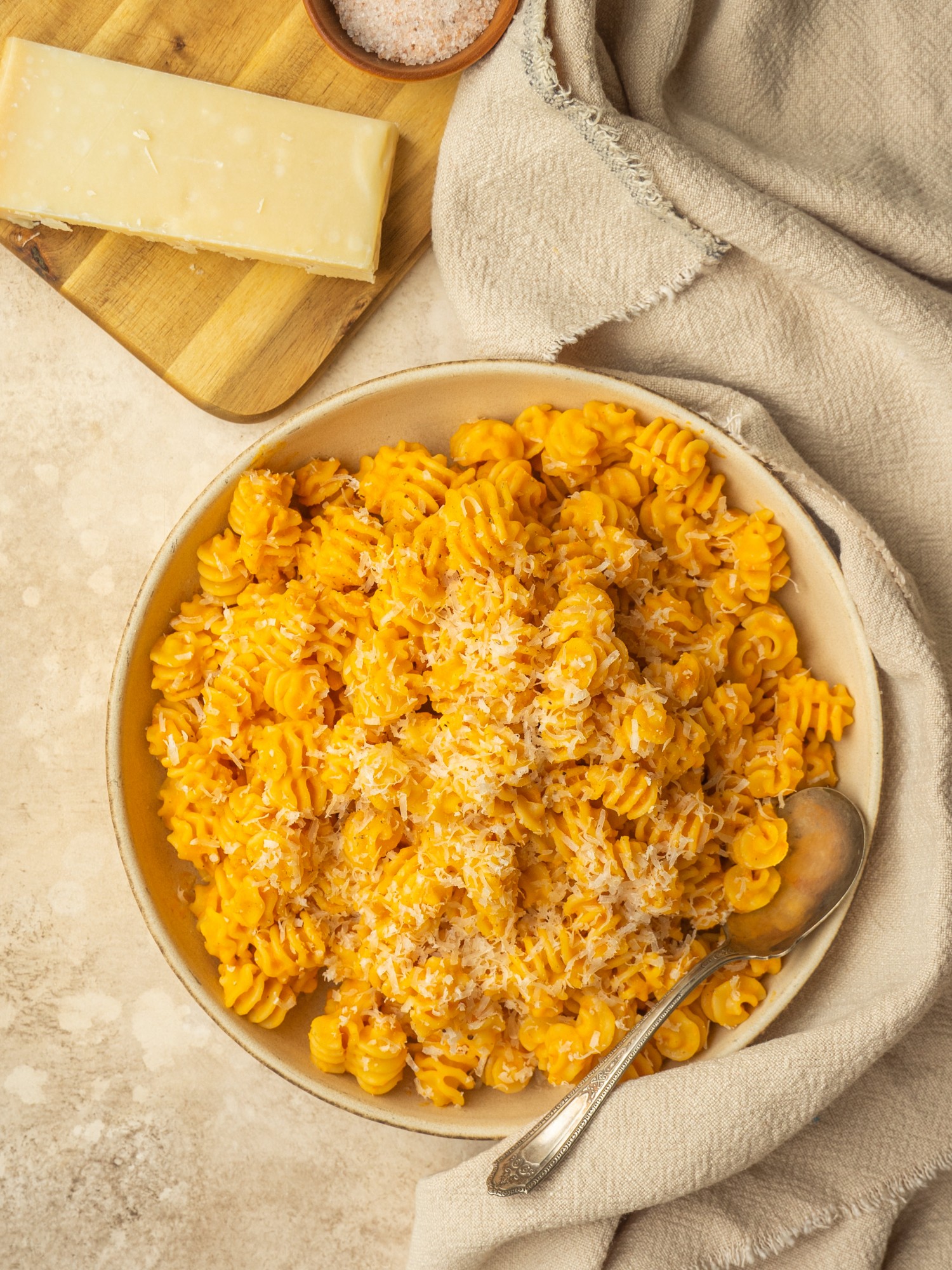
I’ll be honest, I didn’t have high hopes the first time I made this Butternut Squash Pasta Sauce. A pasta sauce built from squash, a couple of tomatoes and half an onion sounded like something you’d eat because it was good for you, not because you wanted it. Then I blended the roasted vegetables with a splash of hot pasta water and it turned glossy and genuinely creamy, and I stood at the counter eating it off the spoon.
There is no cream in this butternut squash pasta sauce. No milk, no cashews, nothing blended in to fake it. Roasting the squash at 450°F concentrates its sugars and drives off water, and the starch in the reserved pasta water pulls it all together into something silky. That’s the whole trick. I use a bag of frozen diced butternut squash, which means no wrestling a whole squash with a knife.
It’s been on this site since 2021 and it’s STILL one of my fall favorites! One batch sauces a pound of pasta with enough left over to freeze, which is how it usually goes in our house.
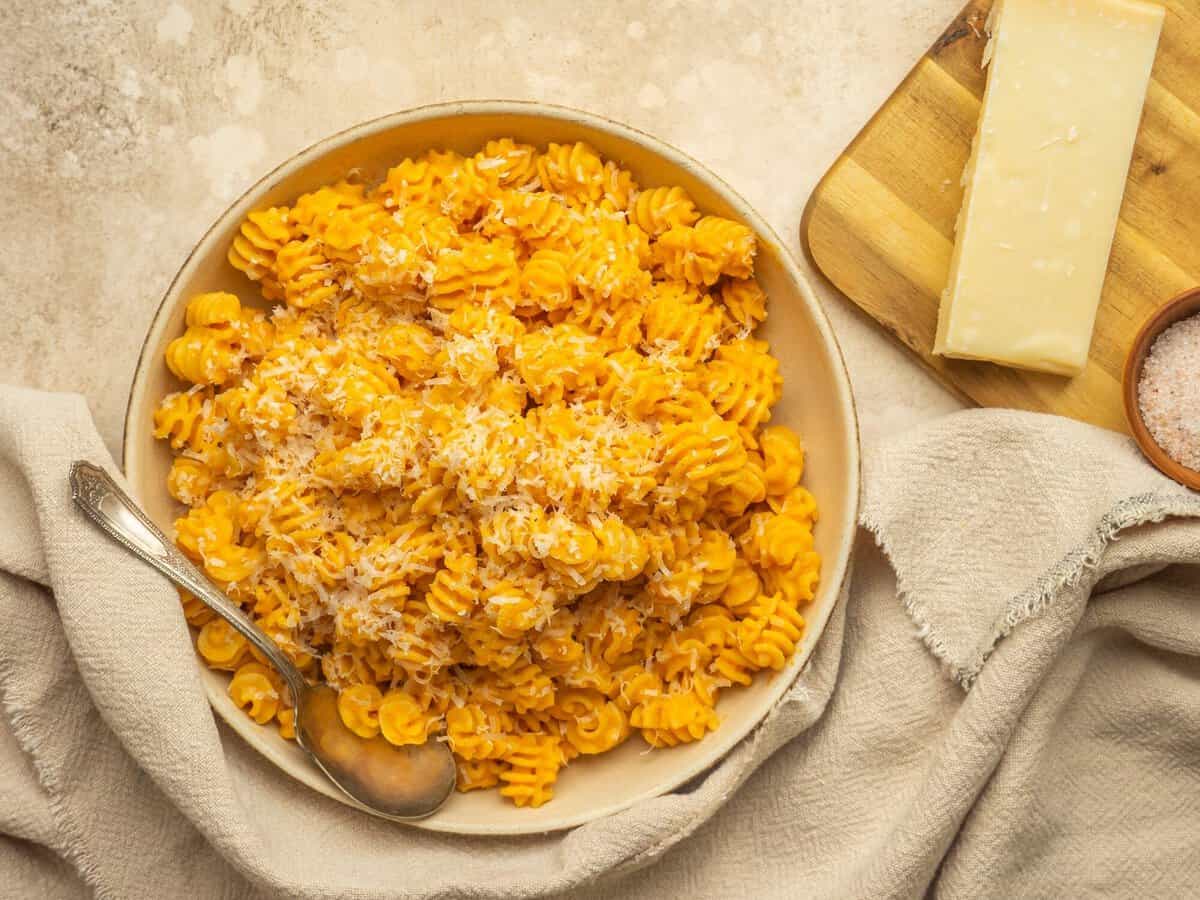

vegetarian
easy fall dinner
Quick Look: Butternut Squash pasta sauce
- ⏱️ Prep Time: 10 minutes
- 👩🍳 Cook Time: 30 minutes
- 🕖 Total Time: 40 minutes
- 🧡 Servings: 6 servings
- ⚡️ Calories: 368 calories per serving (based on nutrition panel)
- 🔥 Cooking Method: Roast and blend veggies, pour over boiled pasta
- 🛒 Main Ingredients: Frozen butternut squash, tomatoes, yellow onion, pasta
- ⭐️ Difficulty: Easy! A perfect weeknight dinner recipe

Why you’ll love this recipe
- Creamy without cream! – the butternut squash caramelizes while being roast in the oven leaving you with a rich, creamy pasta sauce without any heavy cream. This sauce is completely vegan!
- Frozen veggie shortcut – I usually use frozen, cubed butternut squash in this recipe to save myself time and frustration. Cutting into a fresh butternut squash is A LOT of work.
- Great for kids – my toddler boys can be tricked into thinking this is mac and cheese thanks to the bright orange flavor. I sometimes even use macaroni noodles to really entice them to eat a sauce that is loaded with veggies.
For another roasted veggie sauce, you can try this roasted veggie pasta sauce next.
Ingredients you’ll need
You will be amazed at how easy it is to make this healthy butternut squash pasta with just a few simple ingredients.
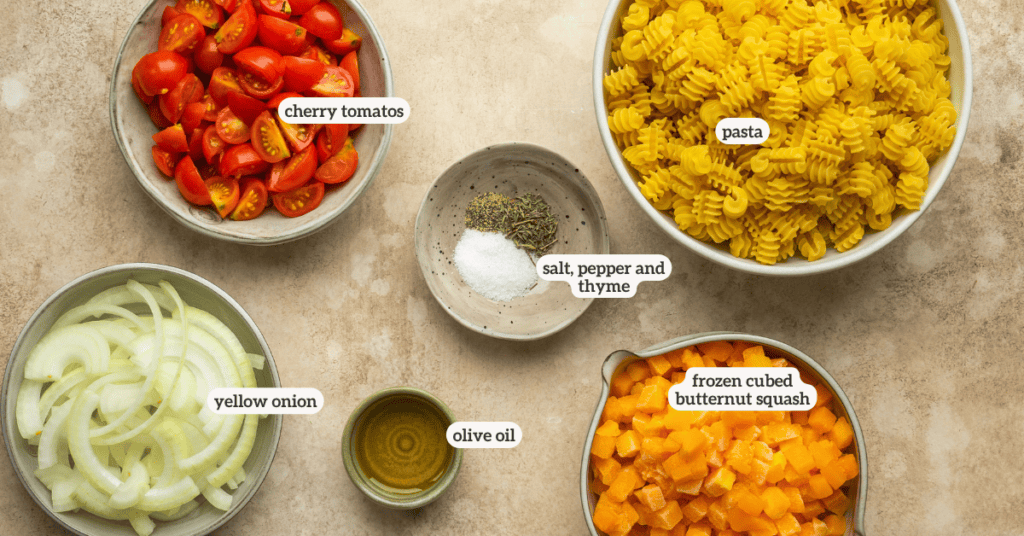
- Frozen cubed butternut squash (16 oz bag) — the whole reason this is a weeknight recipe. No peeling, no wrestling a hard squash with a big knife, no 40 minutes of roasting. Roast it straight from frozen, don’t thaw it first — thawed squash sits in its own water and steams instead of browning, and browning is where the sweetness comes from. Fresh works too: peel and cube it into ¾-inch pieces and you’ll need about 4 cups to match the bag.
- Fresh chopped tomatoes (1½ cups) — these bring the acidity that keeps the sauce from tasting like baby food. Squash alone is sweet and one-note; the tomatoes give it a backbone. Cherry or grape tomatoes are my favorite here because they’re reliably sweet year-round and they collapse into jammy little pockets on the sheet pan, but any ripe tomato you have works. Roma holds up well. Out of season, a cup of canned diced tomatoes, drained, will do the job.
- Yellow onion (½ onion) — roasted alongside everything else until the edges go golden and sweet. Don’t dice it small; big chunks hold up to the high heat without burning, and it all gets blended anyway. A shallot is a slightly sweeter, more delicate swap, and red onion works in a pinch.
- Olive oil (2 tablespoons) — it does more than stop things sticking. The oil carries heat into the surface of the squash so you get real caramelization instead of a pale roast, and it stays in the sauce, which is part of why it tastes rich without any dairy. Toss everything until it’s evenly coated.
- Salt, pepper and dried thyme (1 tsp salt, ¼ tsp pepper, ½ tsp thyme) — season the vegetables before they go in the oven, not after blending. Salt pulls moisture to the surface where it can evaporate, and seasoning early means the flavor is in the vegetables rather than sitting on top of the sauce. Dried thyme is the right call over fresh here: it’s woody and holds up to 450°F, where fresh thyme would just scorch. Dried sage or rosemary both work if that’s what’s in the cupboard, and a few scrapes of nutmeg is a classic pairing with squash if you want it to taste a little more autumnal.
- Pasta (1 lb) — shape matters more than usual with this sauce. I use radiatori, because all those ruffles catch and hold a thick blended sauce. Rigatoni, shells, fusilli, cavatappi and orecchiette all work for the same reason. Long thin pasta like spaghetti or angel hair is the one I’d avoid; the sauce slides off instead of clinging. Salt the cooking water well — it’s your only chance to season the pasta itself.
- Reserved pasta water (⅓ cup) — don’t skip this one. The starch that comes off the pasta is what turns blended vegetables into a glossy sauce that coats every noodle instead of sitting in a puddle at the bottom of the bowl. It’s the single most important ingredient in the recipe and it’s free. Scoop out a full cup before you drain, even though you only need a third — you’ll want the extra to loosen the sauce if it thickens up, and there’s no getting it back once it’s down the drain. Plain hot water will work in an emergency, but it won’t be as silky.
How to make this butternut squash pasta sauce
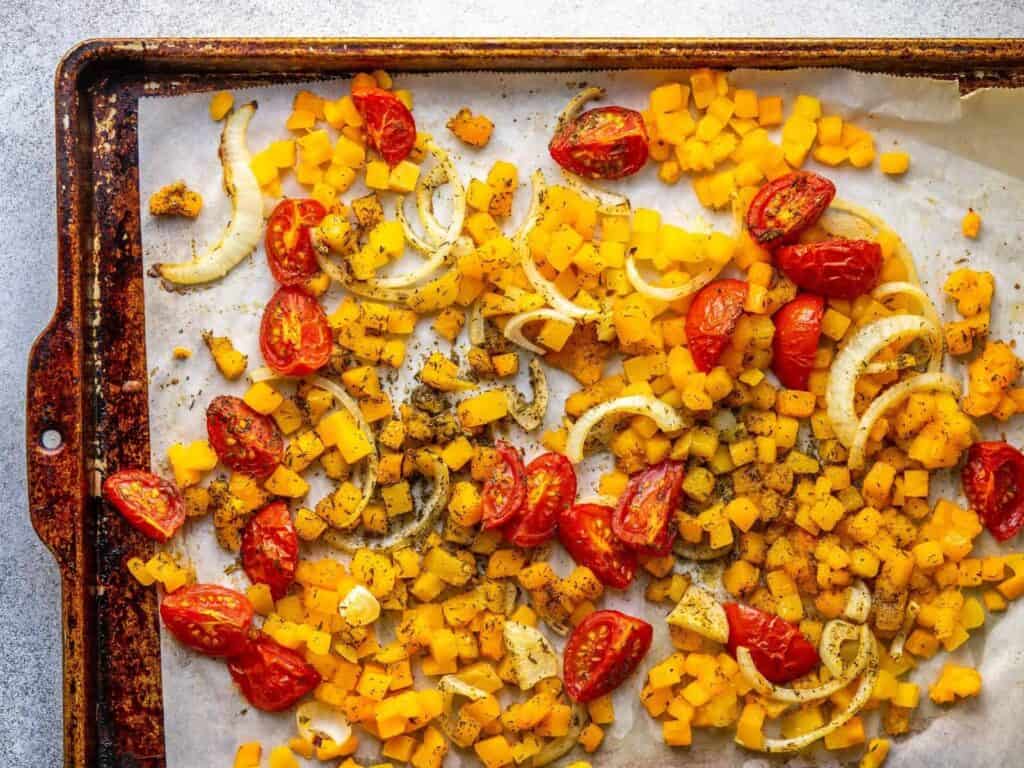
Step 1: Toss butternut squash, tomatoes and onion in olive oil and seasonings. Roast in the oven at 450F until tender. Boil pasta in salted water and reserve pasta water.
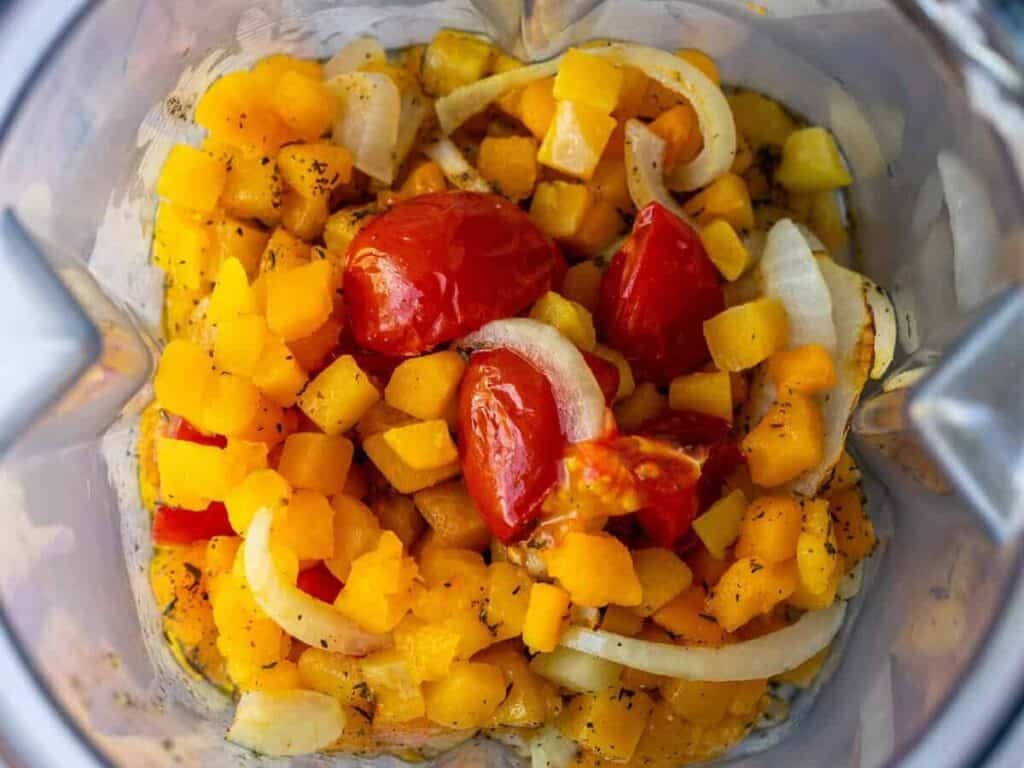
Step 2: Pour roasted vegetables into a blender with the starchy pasta water.
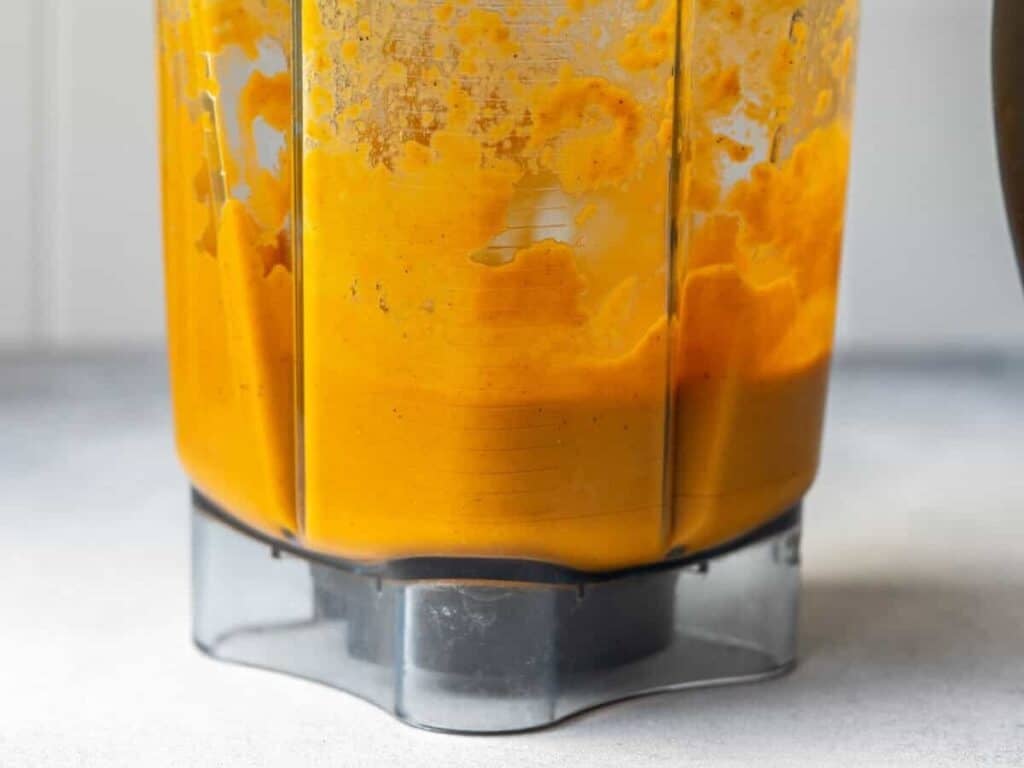
Step 3: Blend sauce until extra smooth.
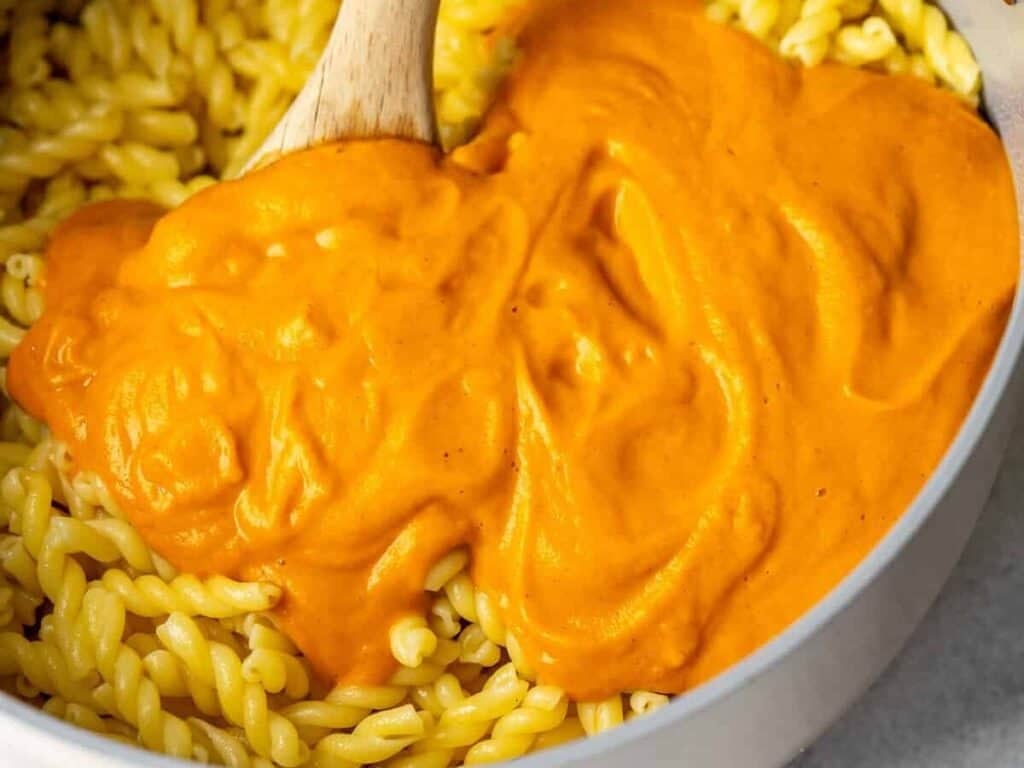
Step 4: Pour creamy blended sauce over the noodles and toss to coat each noodle evenly.
Mad’s Expert Tips for the Best butternut squash sauce
- Roast from frozen, and give the squash room. Straight from the bag onto the sheet pan, no thawing. Spread everything in a single layer with space between the pieces — if the pan is crowded, the vegetables steam in their own moisture and come out pale and watery instead of caramelized. Use two pans if you need to. Crowding is the number one reason a roasted vegetable sauce tastes flat.
- Vent the blender. Hot vegetables and hot pasta water build steam pressure fast, and a sealed blender can push the lid off and spray scalding sauce. Fill the jar no more than halfway, take out the center cap of the lid, cover the opening with a folded kitchen towel, and start on low before you work up to high. An immersion blender straight in a tall container avoids the problem entirely and is what I reach for when I don’t feel like washing the blender jar.
- Add the pasta water gradually. Start with less than you think you need — about half the ⅓ cup — blend, then add more until it moves like a sauce rather than a purée. It’s easy to thin a thick sauce and annoying to thicken a runny one. This is also why you reserve a full cup even though the recipe only calls for a third.
- Fixing the texture: too thick, add reserved pasta water a tablespoon at a time. Too thin, simmer it in the pot for 2 or 3 minutes to cook off some liquid. If it’s grainy rather than silky, the squash wasn’t fully tender when it came out of the oven, so blend it longer and give it another minute.
- Make it a full dinner. The sauce is vegetables, so it’s easy on its own but light on protein. Stir in shredded chicken, crumbled Italian sausage, white beans or a handful of turkey meatballs and it becomes a meal nobody asks questions about.
Looking for another delicious fall dinner? Try this Butternut Squash Gnocchi and Sausage Skillet recipe.
Storage, Freezing and reheating Instructions
In the fridge: the sauce keeps up to 7 days in an airtight container. Store the sauce and the pasta separately if you can — pasta sitting in sauce keeps absorbing it and turns soft and a little pasty by day two. It will thicken in the fridge, which is normal. Reheat it gently with a splash of water, stock or milk and stir until it loosens back up.
In the freezer: this sauce freezes beautifully, and it’s the main reason I make a full batch even when I’m only feeding two of us. Freeze the sauce on its own, never tossed with pasta — cooked pasta goes mushy and grainy after a freeze and thaw, and there’s no rescuing it.
One batch makes about 3 cups of sauce, which is enough for a pound of pasta. Two ways I portion it:
- Ice cube trays for single servings. Freeze solid, pop the cubes into a bag, and 3 or 4 cubes is a lunch. This is the best option if you’re cooking for one or want to add a little squash sauce to something else.
- One-cup portions in jars or freezer bags, which is roughly enough to sauce a third of a pound of pasta. Bags laid flat freeze faster and stack better. If you’re using jars, leave an inch of headspace at the top, because the sauce expands as it freezes and a full jar can crack.
Label it with the date and use it within 3 months. It’s safe beyond that, but the flavor fades.
To reheat from frozen: thaw overnight in the fridge, or tip the frozen sauce straight into a saucepan over low heat with a splash of water and stir as it melts. It may look separated or grainy at first — keep stirring and it comes back together. Finish it with reserved pasta water, same as the fresh version.
Check out these other veggie packed pasta recipes!


You can find the full recipe below. If you make this recipe, please rate and review it in the comments, or share it with me on Instagram!

Email Recipe for Later

Recipe
Butternut Squash Pasta Sauce
Ingredients
- 16 oz bag of frozen diced butternut squash
- 1.5 cups fresh chopped tomatoes
- 1/2 yellow onion
- 2 tbsp olive oil
- 1 tsp salt
- 1/4 tsp black pepper
- 1/2 tsp dried thyme
- 1 lb pasta
- 1/3 cup pasta water reserved from cooked pasta
Instructions
- Preheat oven to 450F and line a baking sheet with parchment paper. Place frozen cubed butternut squash, chopped tomatoes and sliced onion on the baking sheet
- Drizzle olive oil on top and season with salt, pepper, and thyme. Mix to cover the vegetables evenly with oil and seasonings. Bake at 450F for 20 minutes.
- While the veggies bake, cook the pasta according to package instructions. Before you drain the cooked pasta reserve 1/3 cup of the pasta water and place in a blender. (I personally like to reserve a whole cup of pasta water in case I need extra)
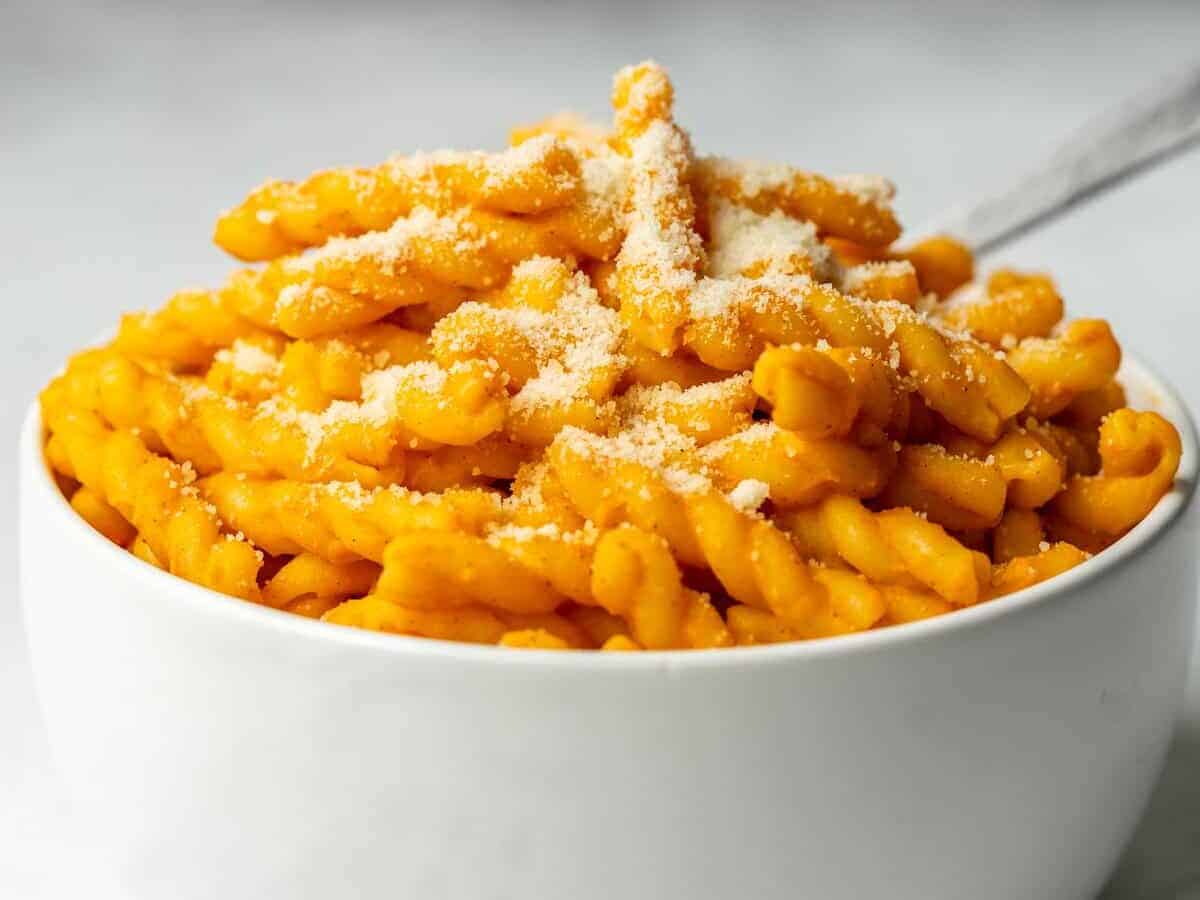
- Take the cooked veggies hot from the oven and blend with the pasta water until a smooth sauce remains. Pour the sauce over the cooked pasta and toss to coat. Serve immediately with parmesan cheese or plant based parm
Recipe Notes
Nutrition Information
This website provides approximate nutrition information for convenience and as a courtesy only. Nutrition data is gathered primarily from the USDA Food Composition Database, whenever available, or otherwise other online calculators.











Leave a Reply